
Program delivery
Programs translate strategy into applied work.
LevelUp programs can be configured as six-month intensives for engineers and technical professionals who need to upskill, two-year applied degree pathways for learners entering post-secondary study after secondary school, or workshops ranging from one-hour sessions to week-long delivery sprints.
- What you'll find
- Which delivery mode fits the audience, the depth of capability required, and the stakeholder environment around it.
- What you leave with
- A clearer view of how applied AI and ML systems, cyber, and institutional capability work can be structured for a specific operating context.
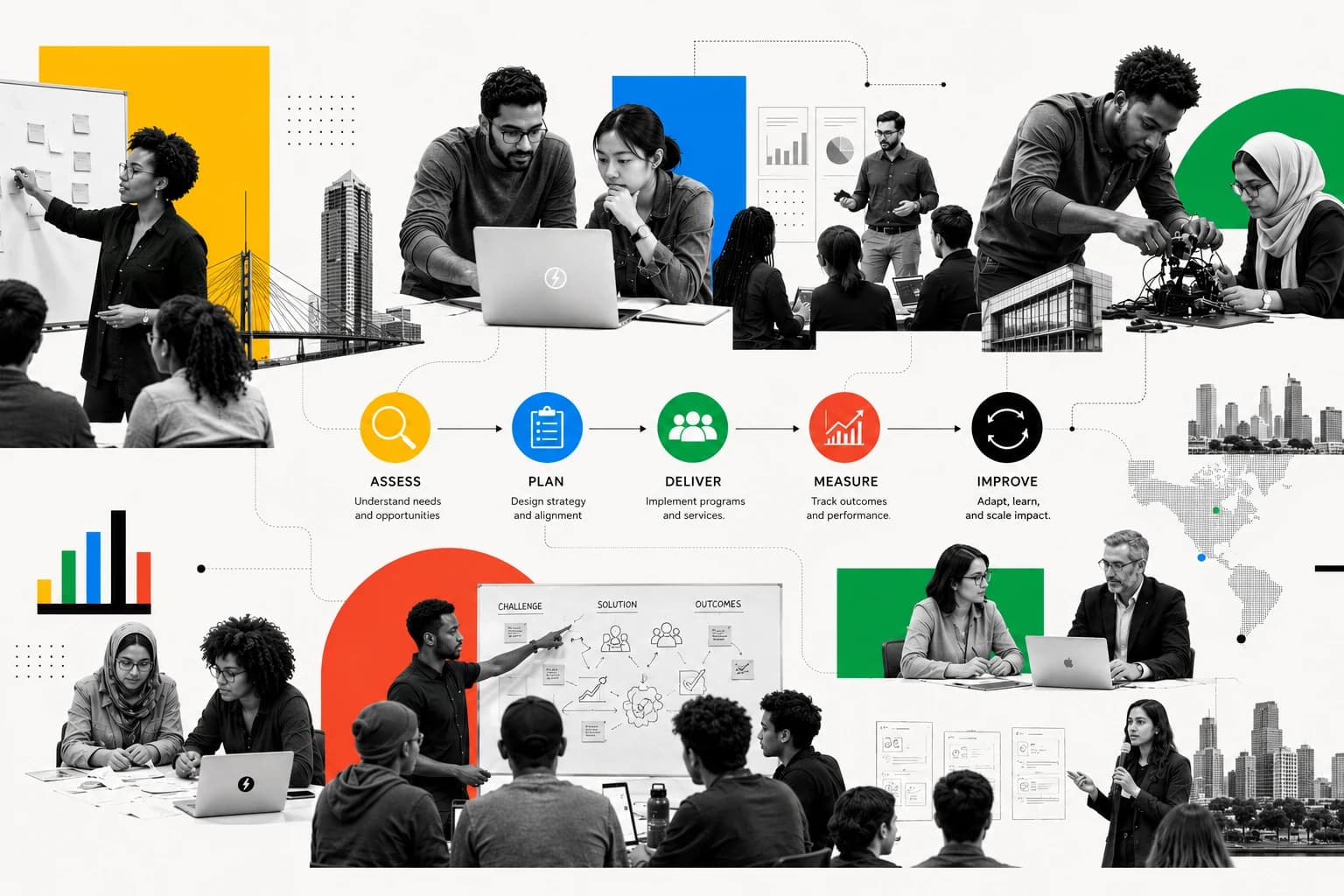
Who programs are built for
Who it is for
Institutions, employers, funders, and ecosystem builders
What it includes
Curriculum, facilitation, applied projects, and reporting logic
Technical pathways
Applied AI and ML systems, AI engineering, and AI security
Outcomes
Capability that shows up on the job
Three shapes the same method takes
Six-month intensive
For engineers and technical professionals who need to upskill quickly.
Two-year degree pathway
For learners entering post-secondary study after secondary school.
Workshop range
From one-hour sessions to week-long delivery sprints.
Program type
Cohorts put accountability and review around applied learning.
Cohorts are the delivery structure behind six-month intensives for working engineers and technical professionals, and two-year applied degree pathways for learners entering post-secondary study after secondary school. They are framed around projects, evidence, and pathways — not just attendance.
- Designed for
- Learners and partners who need sustained practice, accountability, and visible progress over time.
- What you'll find here
- How cohort structure adapts across upskilling intensives, academic pathways, and partner-facing delivery.
Six-month intensive
Best for working engineers and technical professionals
Two-year applied degree
Best for learners entering post-secondary study
Operating layer
Program principle
Program type
Focused workshops for institutions, employers, and ecosystem actors
Short-format sessions work best when they create shared language, practical next steps, and a path into deeper implementation.
Workshops range from one-hour briefings and technical primers to multi-day design sprints and week-long bootcamps. They are useful when stakeholders need aligned understanding, practical capability-building, or a fast on-ramp into larger systems work.
- Designed for
- Teams that need fast alignment, sharper understanding, or a practical starting point for larger work.
- What you'll find here
- How short-format sessions lead into intensives, institutional training, or advisory work.
Duration bands
Formats flex with the capability depth and the decision window required.
- One hour — senior briefings and orientation sessions
- Half day — technical primers and facilitated priority-setting
- Multi-day — design sprints that produce a working plan
- Week-long — concentrated bootcamps with applied output
Role in the model
Workshops work best as entry points into intensives, institutional training, advisory, or ecosystem convening, tied to a broader partnership, a talent-system design effort, or an institutional capacity agenda.
Audiences are typically institutions, employers, partners, and mixed stakeholder groups. The work is to create common language, surface priorities, and build momentum toward longer-term action.
Program type
Accelerators and labs for founders, experimentation, and ecosystem growth
Structured environments where founders, mentors, and ecosystem partners can build momentum.
These formats are venture-creation and ecosystem-building infrastructure. They connect experimentation, founder support, and network effects to a wider economic strategy.
- Designed for
- Founders, ecosystem builders, and partners who need a structured environment for testing, learning, and venture momentum.
- What you'll find here
- How venture-building formats connect to the wider economic system.
Founder support
From promise toward traction
Ecosystem value
Convening mentors, employers, and aligned capital
Public framing
Serious framing for funders and public partners
Related paths
Program type
Advisory that connects strategy with implementation
Advisory work helps institutions and partners move from ambition into action. The strongest engagements are operating supports that align design, delivery, capital, and institutional realities.
- Designed for
- Institutions or partners facing a specific operating decision, design question, or coordination problem.
- What you'll find here
- Where advisory moves a decision faster than a longer program format would.
Engagement pattern
Clarify, align, enable
Step 01
Clarify
Define the problem, stakeholders, and success conditions. Advisory often starts by making a complex challenge clear enough for decision-makers to act on.
Step 02
Align
Bring strategy, delivery, and capital into the same conversation. This is where multi-stakeholder logic becomes practical.
Step 03
Enable
Translate planning into operational next steps and a clear path to implementation.
Program type
Institutional training builds capability the institution keeps.
Institutional capability gets stronger when training is tied to shared operating logic.
Institutional training is tailored to context, grounded in operating needs, and designed to strengthen capacity that lasts beyond the delivery window. It can support ministries, universities, and employers directly, or sit inside longer degree and workforce-upskilling pathways.
- Designed for
- Public agencies, universities, employers, and delivery teams that need capability they can keep using after the training ends.
- What you'll find here
- How training connects to the systems an institution already operates.
Audience
Public agencies, universities, employers, and partner institutions
How it fits
Inside departments, workforce teams, and academic pathways
Outcome
Stronger capacity and clearer operating confidence
Related paths
Reference pathways
Where these formats take shape
Two initiatives carry the pathway architecture these programs draw on — one delivered, one in development.
Applied AI and ML systems
AI.SPIRE is the reference pathway, delivered.
Cyber defense and AI security
The cyber and forensics tracks have their own architecture.
Next step
Tell us the audience, the timeline, and the outcome.
We can recommend a format — or a sequence of them — based on capability depth, delivery capacity, and what your funders and partners need to see.