
Partnership model
Employer partnerships that shape demand, not just hiring.
Employer partnerships are most valuable when they help define capability needs, contribute projects, shape pathway design, and strengthen the wider innovation environment.
- Best use
- Clarify what employers can contribute beyond recruitment, and how that contribution strengthens the rest of the system.
- Strong partners bring
- Demand signals, project opportunities, feedback loops, and practical context for what capability should look like in the market.
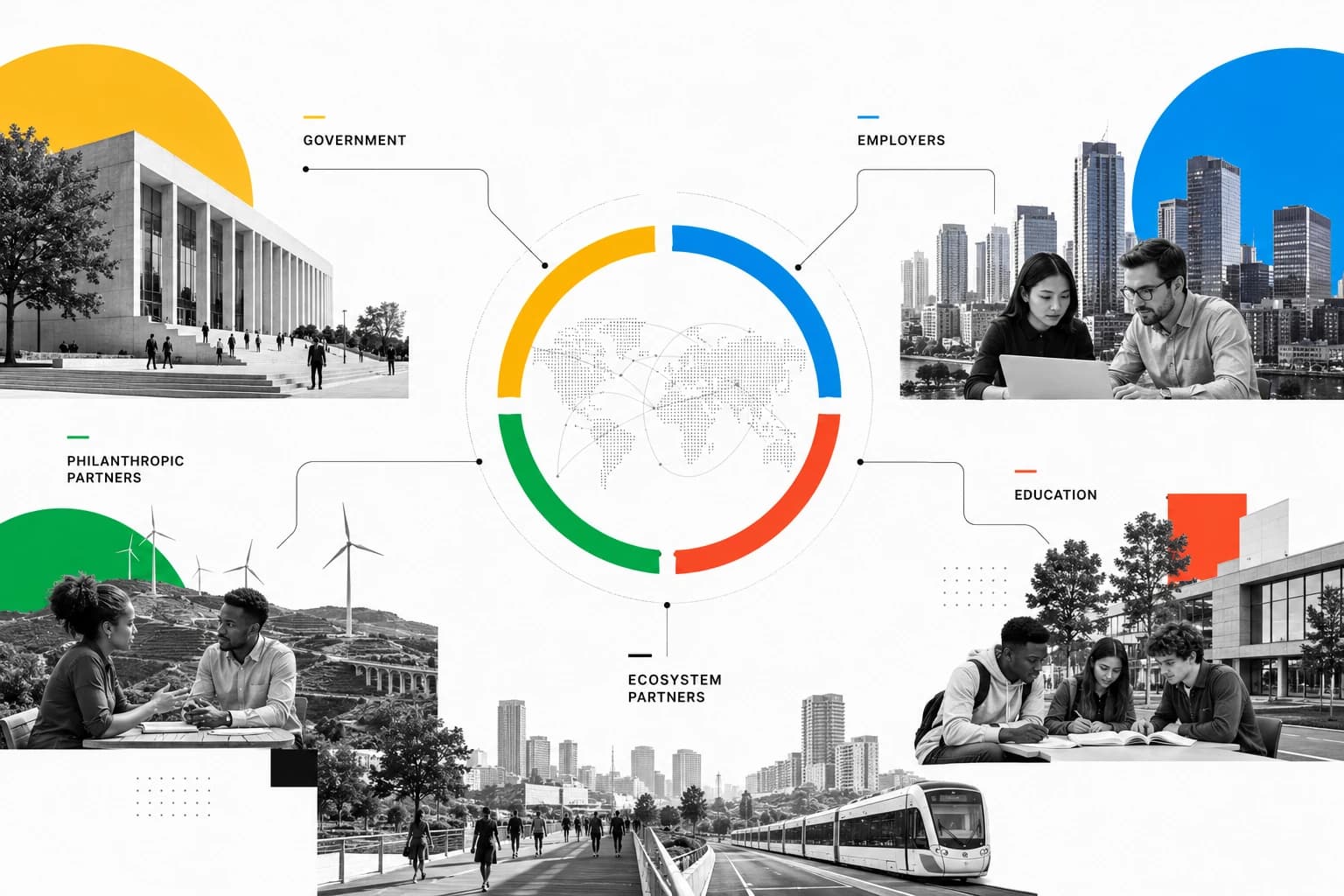
The model
Employer partnerships are strongest when they shape demand, projects, and capability at the same time.
Each is weaker on its own. Together they make a pathway credible to the people entering it and to the labor market receiving them.
Talent
Help shape credible pathways into employment.
Innovation
Support applied projects and collaborative problem-solving
Who it fits
Employers with a capability problem to solve
- Employers who can describe the capability gap behind the job title
- Teams able to contribute a project, brief, or problem to work on
- Organizations willing to give feedback on pathway design as it is built
- Employers whose hiring or upskilling need is regional and recurring
A partnership that begins and ends at recruitment tends to stall: the pipeline is only as good as the capability definition behind it, and that definition is something employers hold. Bringing it into the design stage is the difference between a program that produces candidates and one that produces the capability the market was short of.
How it works
From demand signal to delivered capability
Step 01
Define the demand
Set out the capability gap, the constraints, and what good looks like in your operating context.
Step 02
Shape the pathway
Curriculum, format, and duration are matched to that definition.
Step 03
Contribute the work
Real projects, briefs, and reviewers give participants evidence of capability.
Step 04
Close the loop
Feedback on outcomes informs the next cohort and the wider pathway design.
What each side brings
Role clarity, agreed before delivery starts
LevelUp brings
- Curriculum across AI adoption, leadership, technical, and readiness pathways
- Program design and delivery formats matched to the capability gap
- Licensing options where you want to run the curriculum yourself
- Implementation support and coordination across the other stakeholders involved
The employer brings
- Demand signals — the roles, skills, and standards you are actually hiring against
- Project opportunities drawn from work your teams need done
- Feedback loops from managers and technical reviewers
- Practical context on constraints, tooling, and how work gets done
How to start
Start with demand, constraints, and capability gaps.
The partnership intake form on Partner with us is the fastest route in. Describe the capability gap and the constraints you are working under. The first conversation is about scoping.
Related
The other models
Employer partnerships usually sit alongside public-sector and philanthropic capital.