
Partnership model
Government partnerships that create durable public value.
Public-sector partnerships work best when they connect workforce strategy, institutional capacity, initiative design, and implementation clarity.
- Best use
- Frame how ministries, agencies, and public institutions can support delivery without losing sight of long-term regional outcomes.
- Strong partners bring
- Legitimacy, convening power, public-value commitments, and the ability to align policy, delivery, and institutional incentives.
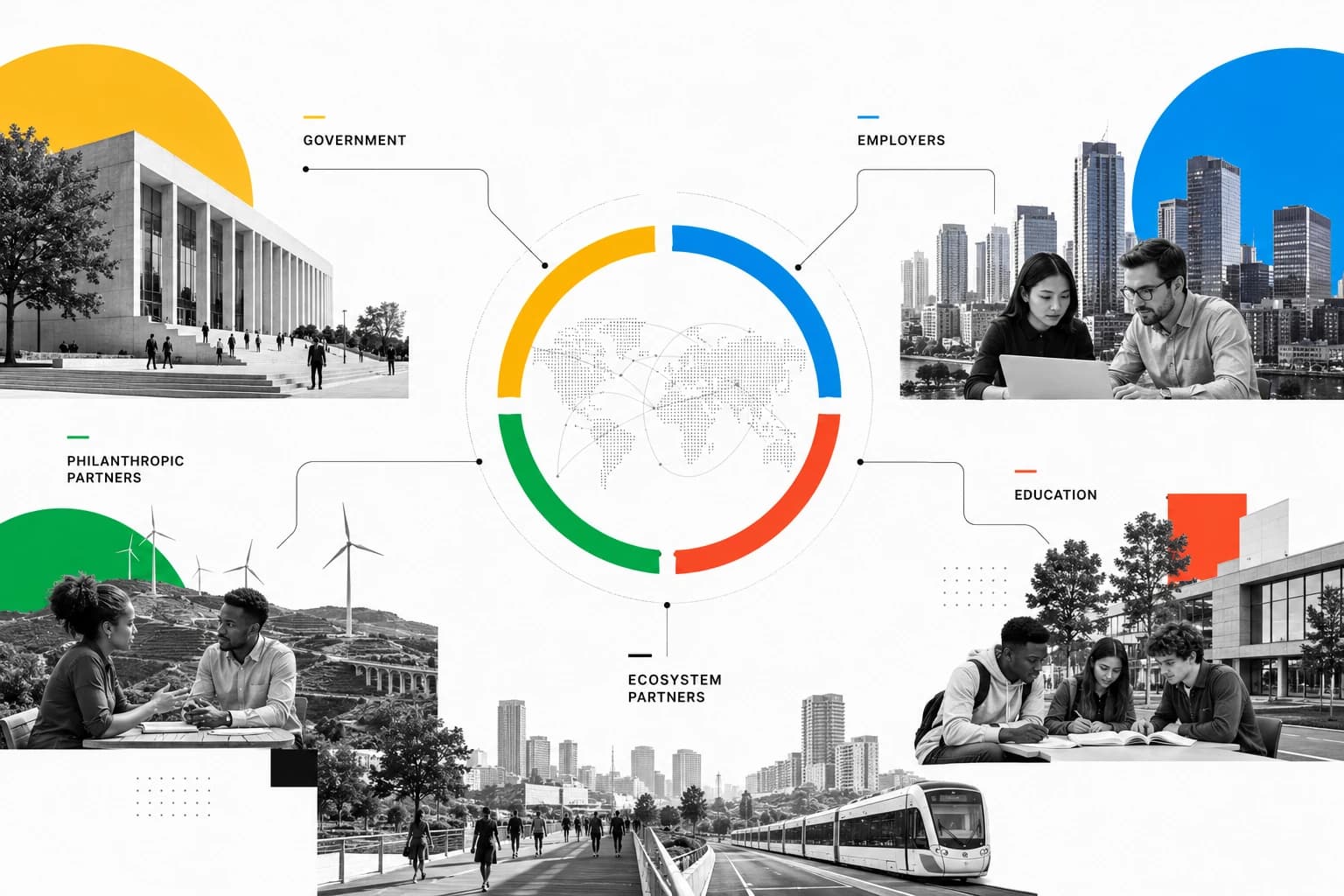
The model
Government partnerships shape legitimacy, implementation logic, and long-term public value.
Public actors sit on both sides of the system — they commission delivery and they set the conditions delivery runs under. The model treats those as one problem.
Typical focus
Talent systems, regional growth, and institutional strengthening
Why it works
Public actors can convene and legitimize the wider model
Who it fits
Public bodies working at the scale of a region
- Ministries and agencies with a workforce, skills, or economic-development mandate
- Regional and municipal authorities coordinating several stakeholders at once
- Public institutions responsible for delivery capacity as well as policy
- Programs where the outcome has to remain visible and defensible over years
The common failure mode in public-sector skills work is a well-funded intervention that leaves nothing behind once the funding round closes. Designing for institutional capacity from the start — who runs this in year three, and with what — is what separates a program from a system.
How it works
From regional challenge to durable capacity
Step 01
Frame the outcome
Name the regional challenge, the stakeholders, and the public outcome that should become more visible and durable.
Step 02
Map the system
Establish who holds demand, who holds delivery capacity, and where the coordination gaps sit.
Step 03
Design the initiative
Curriculum, delivery format, and institutional roles are scoped together.
Step 04
Transfer the capacity
Licensing and institutional strengthening leave the capability in the region rather than with a vendor.
What each side brings
Role clarity, agreed before delivery starts
LevelUp brings
- Curriculum across AI adoption, leadership, technical, and readiness pathways
- Initiative and program design that accounts for delivery constraints
- Licensing routes so institutions can run the curriculum themselves
- Coordination across employers, funders, educators, and delivery teams
The public partner brings
- Legitimacy and convening power across the stakeholders involved
- Public-value commitments and the outcomes the work is accountable to
- Alignment between policy, delivery, and institutional incentives
- Institutional homes for the capability once the initiative matures
How to start
Start with the regional challenge and the public outcome.
The partnership intake form on Partner with us is the fastest route in. Where funding structure is the open question rather than delivery, Fund this work is the better starting point.
Related
The other models
Public-sector partnerships are usually strongest alongside employer demand and philanthropic patience.